
Book: Steppenwolf
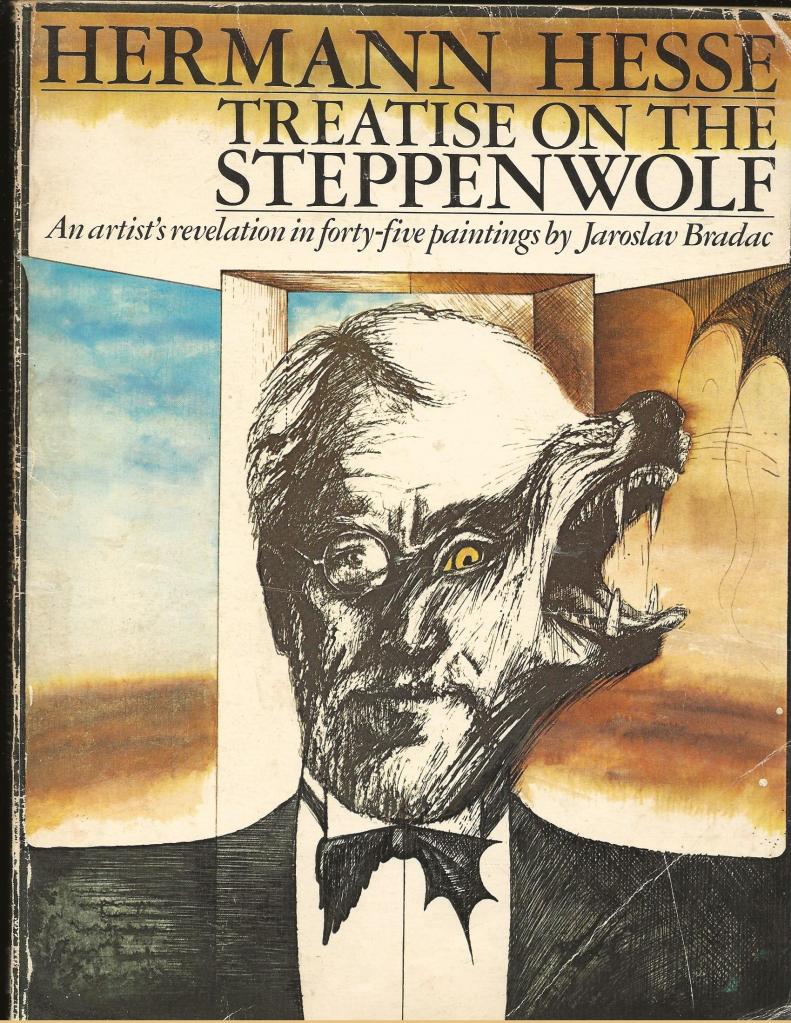
Steppenwolf is a thought-provoking novel on the spiritual depth of feeling stuck and seeing spirituality and intellect as dreadful hindrances that weigh you down to be an outcasted misfit.
Harry Haller, a renounced intellectual who has lost everything, falls into an existential crisis. In an attempt to claw himself out of it, he only digs even deeper. His life changes in unexpected ways when he can’t face his fate with a razor blade.
Narrative
I’m an incredibly picky person with books because the first thing I notice is its narrative style and how well-written it is.
Herman Hesse shows just how incredibly versatile his writing is in barely 250 pages. From a writer’s perspective, he’s insanely brilliant.

Blessed with a tongue that can speak of life’s pleasures and sufferings, Hesse writes in a most refined and poetic way through prose without losing the depth of meaning.
He is a gifted writer because even though many poets frown upon poetic prose and see it as a failed attempt to express life in its purest form – Hesse masters both language and feeling in Steppenwolf.
The story, without saying anything about the story
The book in itself makes any intellectual and spiritual person understood. It reflects the solitude of knowledge as well as the paradoxical appreciation for life and society without feeling a sense of belonging to them.
It shows the depth in which the mind manages to question all things, even one’s very own identity – which ends in a profound self-loathing that fogs us into a vicious cycle of life-ending thoughts.
What is absolutely brilliant about this reflection, however, is that it also mirrors the fact that such depths of thought and suffering is merely a result of victimhood. An absurd reaction from a supposed “spiritual intellectual,” right? Why can’t they just think themselves out of it? Easier said then done, my friend.
What I love most about Steppenwolf (apart from its strong critique on the Bourgeoisie) is hot it presents the questions from this troubling mindset to life-threatening depression.
The Steppenwolf Antidotes
To me, each of the questions (and answers) in the story are a form of antidotes to existential crisis, which we intend to use to halt our suffering.
The Simple Pleasures
Life when lived through its most empirical sense might feel too Epicurian, but spiritually speaking it allows our awareness to become more grounded, present and grateful.
Yet, such pleasures might end up being abused and taken to extremes, which is equally as tormenting.
Sex, food, alcohol – good in moderation, toxic in excess. So, not the best antidote.
Drug Experimentation
Life when lived through drugs is a pleasant avoidant because it definitely broadens our perspective to live and perceive reality differently under the influence.
It’s also an effective anaesthetic to numb our overwhelming feelings instead of helping us navigate them.
Drugs only sink us deeper into an abyss of questioning reality and our feelings, let alone the truth behind them.
SO yes, drugs will only lead you further down the bottomless pit of existential crisis (but not if you’re high all the time, WOOHOO)
Self-Isolation
Ah, my personal favourite.
It’s easy to be overwhelmed by the limitless knowledge of the world and the endless individual potential of the human mind.
What’s even more overwhelming is the impotence of changing society and its prominent, comfortable ignorance that makes it a struggle to even want to be an active participant.
As pleasing as becoming a hermit and abandoning society for your own good sounds, mankind is a social animal. Self-annihilation from a world that refuses knowledge and critical thinking without seeking any true sense of development of character is only counterproductive.
It’s practically suicide itself.
The Defining the Persona
Another form of coping is our way of attempting to fight existential crisis by stereotyping our personality into two or more identities in order to grasp our existence.
Fitting our identity into a box or two may allow us to reach a certain level of understanding who we are, but only limits our self-knowledge and hinders our personal development.
Defining ourselves is denying ourselves to become anything other than the idea of what we think we are.
The Real Antidote?
Read Steppenwolf.
Steppenwolf is a journey that makes us realise that man’s questions often have simple answers.
We tend to complicate life, yet the intellectual complicates himself even more.
Life and identity are only limited by our beliefs, our challenge is to continuously unravel every layer of who we are with child-like curiosity.
Steppenwolf is not a book about suicide – it’s about healing.
There is no reality except the one contained within us. That is why so many people live such an unreal life. They take the images outside of them for reality and never allow the world within to assert itself.
Steppenwolf (1927) by Hermann Hesse
 Spiritually