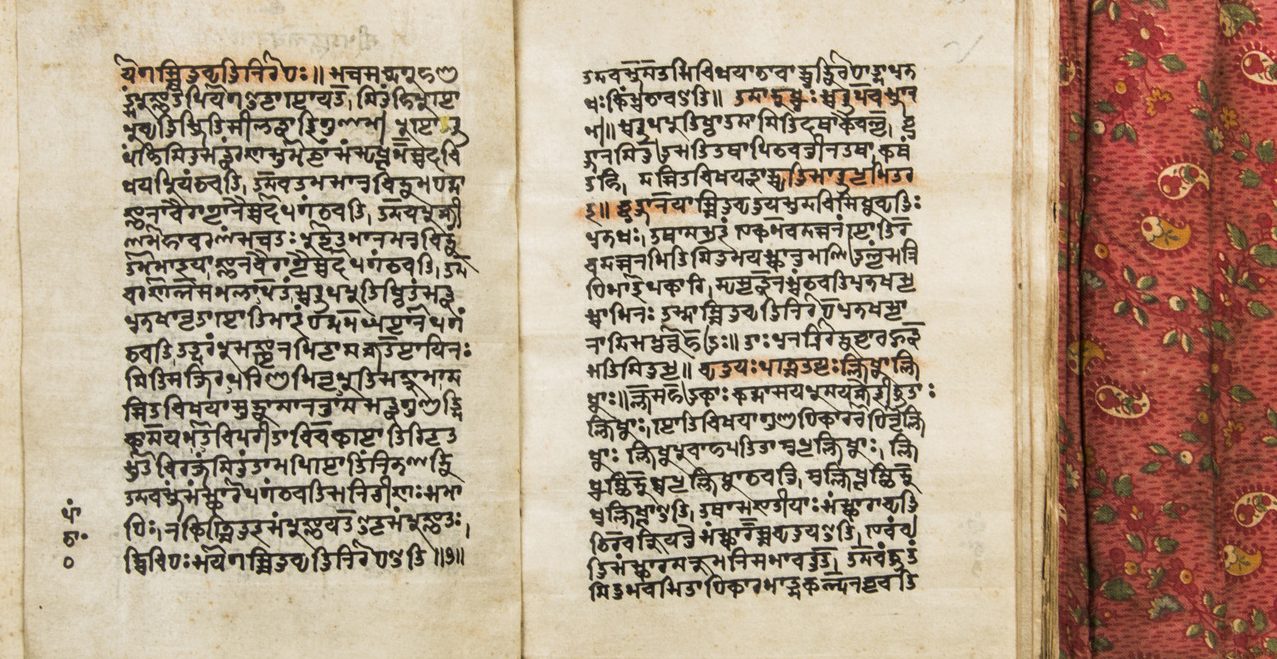
Contrary to common belief, yoga is not only intended for becoming more flexible and fit – but rather, in its original practice, it was intended to guide the individual to the divine through yogic practices. The meaning of yoga itself in Sanskrit is “to unite, to join.”
The guru (the Sanskrit word for “mentor, expert, guide or master”) was a figure in charge of passing on the yoguic practice almost in a clandestine way to students. This one-on-one passing of yogic knowledge is also one of the many reasons why the origins of yoga are so unclear.
Over centuries, singificant yogic manuscripts appeared such as the Bhagavad Gita and the Mahabharata where the term of yoga and its practice is mentioned.
However, one of the most significant works that outline a systematic way to approach yoga is Patanjali’s Yoga Sutras – a work where the famous 8 Limbs of Yoga are mentioned and tell us the steps we need to take to live a harmonious and conscious life through yoga.
Patanjali and the Yoga Sutras
Patanjali was a sage, yogi, musician and writer whose identity is still hotly debated among scholars.
However, what is certain is that Patanjali is the author of the yogic manuscript Yoga Sutras.
The reason why the Yoga Sutras is such an important text is because it is the first time in history that the practice of yoga is so clearly and precisely systemised, marking a clear path in which yoga should be practiced in order to experience the essence of yoga: union.


The 8 Limbs of Yoga
According to Patanjali, the true practice of yoga is intended to “cease the fluctuations of the mind” and hereby allow the mind, body and spirit to be released from distractions and surrender to the present moment entirely. Only this way can the individual experience full awareness and serenity.
Here are Patanjali’s 8 steps in yoga:
1. Yamas
Yama is the first limb of yoga and it brings our awareness to how we interact with those around us and the world that surrounds us. It builds the fundamental thought that self-awareness is connected to the awareness of others, thus we have the responsibility to install the following yamas into our daily life to live in harmony with our surroundings.
There are five yamas:

- Ahimsa (non-violence)
- Satya (truthfulness)
- Asteya (non-stealing)
- Brahmacharya (right use of energy)
- Aparigraha (non-greed or non-hoarding)
2. Niyamas
They are individual principles related to our own conduct toward ourselves, bring our focus from without to within. Our awareness shifts from observing our surroundings to being aware of ourselves.

Niyamas consist of:
- Saucha (cleanliness)
- Santocha (contentment)
- Tapas (discipline, burning of desire)
- Svadhyana (self-study or self-reflection)
- Isvarapranidhana (surrender to a higher power)
3. Asanas
It is the position or the physical posture which, according to Patanjali, has to be steady and comfortable. The concept of asanas in the Yoga Sutras is that the postures are uniquely sequenced to enter meditation, destined to produce physical and mental effects to facilitate it.
Through the practice of different postures, we allow energy in the body to move more freely and also obtain sufficient strength, flexibility and balance within the body to allow the mind to calm and not be disturbed by restlessness.
Here’s a blog post on the different styles of yoga that approach the practice of asanas differently.

4. Pranayama

Once the body is comfortable and steady, pranayama moves our focus toward the control of the breath.
Through several breathing techniques, or pranayamas, we learn to manipulate the prana, the vital energy force that moves through all living things. Each technique moves energy differently within the body, allowing us to change our state of being and also freeing ourselves from the mind’s intrusive thoughts by focusing solely on the movement of the breath.
They are breathing techniques that regulate prana, the vital energy force that gives life to all living beings. They are composed usually by three phases: inhalation (puraka), retention (kumbhaka) and exhalation (rechaka).
5. Pratyhara
Once our awareness has shifted from the movement of the body to the movement of breath, the mind withdraws from the senses and is no longer prone to the distractions of the external world. This process allows us to dive in deeper to our mind and to create a stillness within as well as heighten our concentration. Although Pratyahara can be achieved in different ways, the easiest is arguably through the practice of asanas and pranayamas.
6. Dharana
Essentially, the practice of dharana goes hand in hand with pratyahara.
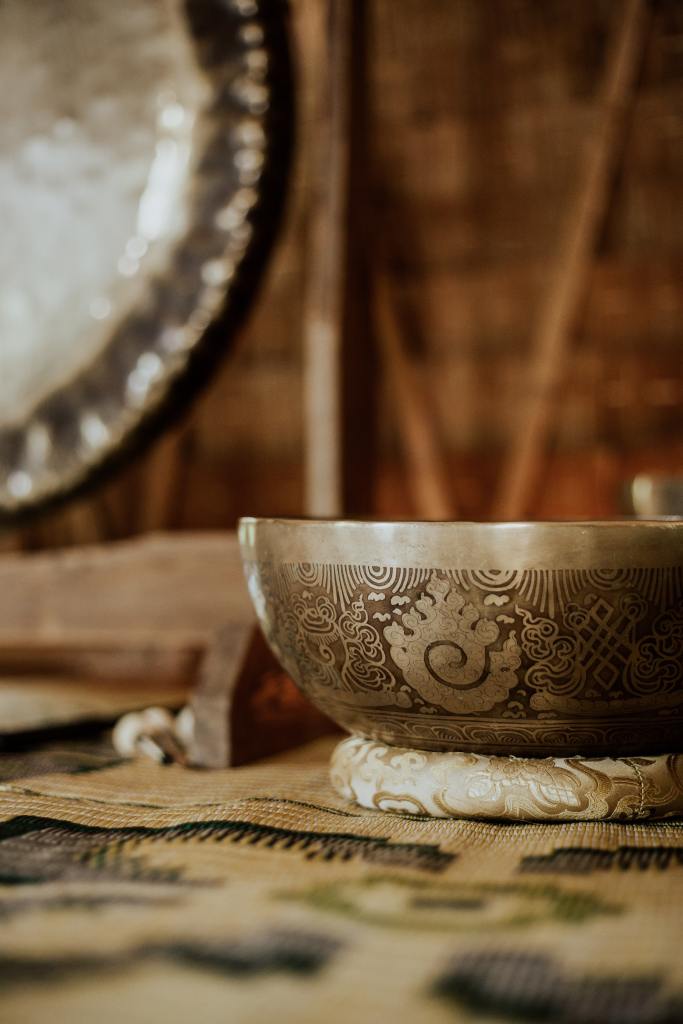
Pratyahara allows us to withdraw from anything that could be causing restlessness of the mind in order to focus our attention on a particular anchor through dharana. This point of focus can vary, but it can be a mantra, a visualisation, the sound of tibetan bowls, etc.
Dharana allows the mind to hyperfixate and, therefore, anchor our awareness even more deeply connected to the present moment.
7. Dhyana
Dhayana is the result of all of the previous steps proposed by Patanjali. It is the moment in which we are so immersed in the present moment.
It is when we often have the thought during meditation of “oh, wait – I’m actually meditating”
In this stage, there is no distinction in the mind between the meditator and the object of focus as well as any possible conditioning is released.
8. Samadhi

Once we have harmonised ourselves with our outer world and our inner world, we feel what yoga truly is – union, oneness.
Such union is samadhi, an enlightenment or a blissful state. It is not a moment of feeling ecstasy or pleasure, it is a moment of seeing life for what it truly is. Without worries, without thoughts, without emotions, without sensations of pain or pleasure… Simply being in the moment and, as easy as it may sound, simply being.
Want to learn more about yoga?
Check out the blog!
7 Myths of Yoga
Although many people have tried yoga at least once, its hard for people to get into it at the beginning. Usually it is because of lack of commitment,…
Which Yoga Is Your Vibe?
Over the years, yoga has become more and more visible thanks to the media and social networks. Tabloids write about how celebrities are in and out of yoga…
Ahimsa and the Power of Reading
Ahimsa is a Sanskrit word that stands for “absence of injury”, an ancient concept that appeared in the Vedas – one of the sacred Hindu stories that has…
 Spiritually