Although many people have tried yoga at least once, its hard for people to get into it at the beginning. Usually it is because of lack of commitment, time or not finding the right studio or teacher.
However, more often than not, it actually is because of the many prejudices around yoga.
So, let’s debunk the following myths about yoga that may be keeping you off the mat.

1. You can’t practice yoga unless you’re flexible
I’ve heard this so many times from people who are curious about dipping their toes in yoga and it honestly breaks my heart to hear it.
No, you DON’T have to be flexible to practice yoga.
First of all, yoga is so much more than the flexibility, strength and balance your body gradually adapts to. Focusing only on physical abilities is besides the point of yoga, because the practice of postures is meant for focusing the mind onto the body. Traditionally, the postures in yoga were used to focus the mind onto something tangible to gradually move it to our breath and then to our mind in order to facilitate meditation.
The point of yoga isn’t doing a banana split or putting your leg over your head – the point is cultivating our awareness into the present moment and connecting back to our body as we tend to live in our heads.
TRUTH: Even if you are as stiff as a dead body, you can still practice yoga (you’ve got the beating heart for it, too)
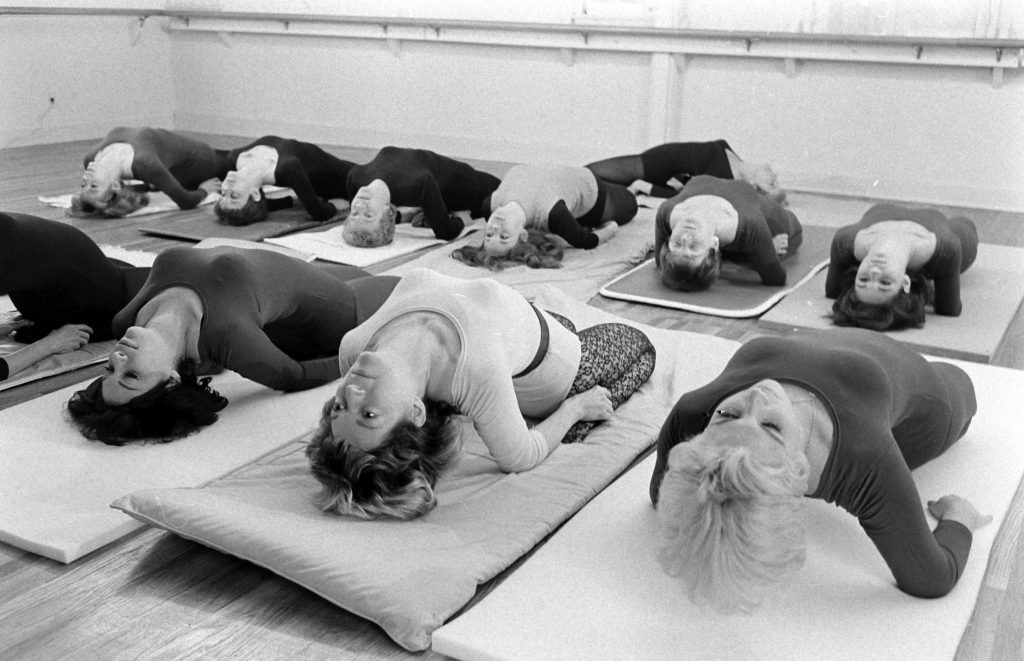
2. Yoga is only for women
Another very annoying misconception.
Contrary to common belief, yoga has always been primarily a male-dominant practice until recent years when important yogic figures (all male, by the way) came from India to the West to spread awareness of the practice.
Jois, Iyengar, Yogi Bhajan – all men (except Indra Devi, who deserves an honourable mention.)
If that isn’t surprising enough, yoga has always been a practice passed strictly between guru and practitioner in India in order to preserve and care for the practice. A guru and a practitioner that were men. Women only really began to practice yoga in the 1930s.
The reason why it appears as though women are the only ones practicing yoga is because yoga was popularised in the US over the 1950s-60s as celebrities such as Marilyn Monroe and Eartha Kitt practiced it. Since then, the media has been glamourised self-care activity only for women.
TRUTH: Yoga is a practice for everyone. It does not discriminate gender, sexuality, race, religion nor physical ability. It is a practice for EVERYONE.

3. Yoga makes you happier and calmer instantly
Well, if this were half true I think everyone would be hooked on yoga. Yet, unfortunately, it’s not. At least not entirely. Hear me out.
Yoga is a practice that is way more about inner work than outer work. You might be moving your body into different postures, breathing according to different rhythms and meditating to the sound of Tibetan bowls – but this whole practice reflects who you are more than the practice itself.
During yoga, your sole focus is yourself: how your body moves, how you breathe and how you think.
It is not often that you let yourself become so in touch with yourself on purpose – allowing ourselves to be with ourselves is something we’re not often willing to do, we often need someone else to give us space for our thoughts and emotions. It’s hard to face them head on.
That’s why awareness can be as beneficial as frightening. It may seem too much because you feel overexposed or hyperjudgemental of yourself, or perhaps you may feel like nothing arises within yourself during your practice (or is it that you don’t feel like you want anything to arise?). Yet, observing negative thoughts, giving space for negative feelings and sensations can actually be incredibly beneficial.
Acknowledging what hinders our happiness or tranquility is exactly what we need to live a fuller, happier life – but it is facing these hinderances that is difficult.
TRUTH: Yoga doesn’t make you happier or calmer, you do.

4. The more difficult the poses, the better you are at yoga
This is perhaps the easiest one to fool ourselves into.
Yogi influencers on social media may be showing off their strength and flexibility by folding their body into pretzels and balancing their entire body on one hand, but that does not mean that they are the best at yoga.
The truth is – no one is better at yoga.
Yoga should not be seen as a competition, whether it is in the yoga studio comparing yourself to the practitioner next to you or the yoga teacher that is leading the class.
Comparison in yoga, like in any other aspect in life, only encourages jealousy, underappreciation and just generally makes you feel unhappy. Comparison, whether in yoga or in our every day lives, is one of the most frustrating things we can do to ourselves that only feeds into our own negative talk.
People have different abilities, different struggles, different paths. And that’s also reflected in our yoga practice.
The only thing you should be comparing yourself to is your older practices, how they’ve morphed over time and been different in different moments of your life – appreciating them and acknowledging the journey of the practice.
That is all.
TRUTH: Yoga is not a competition.

5. The more precision in your alignment, the better you are at yoga
NO.
Just no.
B.K.S. Iyengar would probably tell me off for saying this if he were alive, but honestly alignment isn’t everything in yoga.
First of all, yoga is way more than postures. It is pranayama and meditation, too. But there’s also the morality and the philosophy (yamas and niyamas) behind that are important to incorporate in our practice.
It is absolutely FINE if you’re not exceptionally aligned during a yoga class, as long as you’re respecting your body and positioning yourself in a way that makes you feel comfortable without straining yourself.
With practice, alignment follows. But presence and awareness are the priority.
TRUTH: Yoga goes way further than perfect alignment in postures. It’s about presence and awareness.

6. Yoga is basically another work out
Wrong.
Now, I am all up for working out at the gym and how therapeutic lifting weights can be as well as playing sport – but it must be said that yoga is not a work out.
Yes, some styles of yoga can be very demanding physically and can certainly challenge your stamina – but, as I mentioned before, yoga is way more than postures.
Yoga can be a calm, soothing practice on a physical level as well as active and dynamic. It can also be incredibly still.
At the end of the day, yoga goes beyond the body as its aim is to unite body, mind and spirit. It is a practice to make us more present and aware – not bulkier, faster or more flexible.
TRUTH: Yoga is more than the body. Its practice is versatile as it can be slow, dynamic or still. It has no bounds.
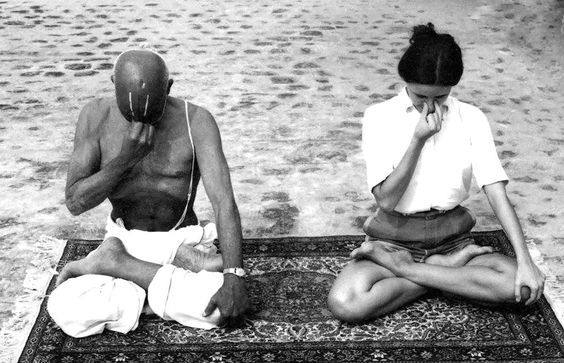
7. Yoga is Easy
Perhaps the most common thing students tell me at the end of a class is finding out that yoga actually isn’t easy.
Moving your body continuously with your breath isn’t easy.
Balancing your body in a position for a long time isn’t easy.
Focusing on your breath during a pranayama isn’t easy.
Being in silence and not letting your mind run wild during a meditation isn’t easy.
Laying down still on your yoga mat isn’t easy.
Whether your yoga practice is more dynamic, paused or still – yoga in itself is not easy.
It is a practice that reflects who we are back to ourselves. We present ourselves on our mat not to others but to ourselves, to see ourselves vulnerable and to work with whatever arises without judgement, without resentment or giving too much thought.
We simply allow ourselves to acknowledge whatever arises and embrace whatever feelings, thoughts or struggles that may arise.
TRUTH:
Yoga might not be easy, but it is the practice that doesn’t make us better at the practice itself, rather it makes our lives and us better.
 Spiritually