
Applying yogic wisdom to daily life.
The current world crisis has only caused cruelty to be expressed in more subtle ways and, unfortunately, it’s becoming more common in our daily relationships. The anxiety, desperation and hopelessness of the situation has left people understandably on edge.
Even though it is a situation that effects us all, there is a defensiveness that everyone subconsciously feels that make us lash out and make a fuss about incredibly insignificant things. It’s basically been two years of on-going hysteria.
Yet, this impulsive and primitive way of reacting not only causes harm to others, but also to ourselves.
As yogi Sri Swami Sivananda says in his book Bliss Divine:
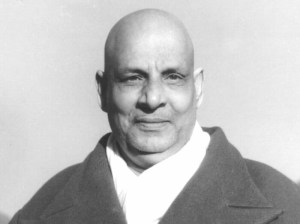
“… in the regeneration and divinisation of man, the first step is to eliminate his beastly nature. […] Therefore, wise sages prescribe ahimsa (non-injury). This is the most effective master method to counteract and eradicate completely the brutal, cruel Pasu-Svabhava.”
The meaning of Ahimsa
Ahimsa is a Sanskrit word that stands for “absence of injury”, an ancient concept that appeared in the Vedas – one of the sacred Hindu stories that has strongly influenced the philosophical school of yoga. It is also a concept mostly known for being part of the first eight limbs of yoga, Yama, which is the limb which focuses on practices related to self-regulation.
Ahimsa is an ethical principle of non-violence. It is a practice that requires awareness and dedication to ones actions, thoughts and feelings towards others and to oneself.
The word practice itself implies that it is something that needs to be applied, which takes work, time and refining. Ahimsa might sound like a simple concept, but it can be a struggle not only to practice but also to maintain.
Actions, words and thoughts
Vietnamese Thien Buddhist monk and peace activist Thich Nhat Hanh proves how powerful words and thoughts are in his book The Art of Communicating:

Throughout our day, we produce energies of thought, speech and action. We’re communicating in every moment, either with ourselves or with others. Thinking, speech and bodily acts are our own manifestations. You are your action. You are what you do, not only what you do with your body, but also with your word and your mind. Karma is the triple action of our thoughts, our speech, and our bodily actions. Thinking is already action. Even if you don’t see its manifestation, it is there as powerful energy. Thinking can push you to do or say things that are destructive, or it can create a lot of love.
– The Art of Communicating, Thich Nhat Hanh
So, to produce a thought is to act. We all know the sentence “actions speak louder than words” and French philosopher Sartre famously said “Man is the sum of his actions.”
If to think is to act, and we are the result of all our actions – where do we even start if we want to change ourselves?
Meditation teaches us to be aware of our thoughts and perhaps even control them, which makes it an effective practice in the long run. But, not everyone sees the effectiveness in being in Lotus pose or in Savasana or actively practicing ahimsa as – unlike the physical practice of yoga (asana) – you can’t see immediate results.
So, what other practice can help with ahimsa?
The Power of Reading
Whatever we read inevitably effects our thoughts – whether it is a book, the news or an Instagram post. When it comes to social media, people are even getting used to purging their following accounts to get rid of any negative or useless information from their feed.
Not surprisingly, reading helps our mind in so many different ways. In the neurological sense, it helps to keep our minds young, healthy and sharp whilst also preventing diseases, such as Alzheimer’s. It’s also an excellent pass time to de-stress as it helps calm down the nervous system while the mind concentrates.
However, the power of reading truly lies in giving a greater perspective on the world that surrounds us. Books have the power to make us understand different lives without judgement, simply through contemplation and connects us to our true compassionate nature.
Through books, we can experience the world as another gender, ethnicity, culture, sexuality, profession or age. We can learn about the struggles of poverty, the horror of war, the blissful joy of romantic love or the inner turmoil of depression.
Reading is a door to living other lives whilst sitting on the train, laying on the beach or simply being in the comfort of our own homes. It allows us to get closer to others but, above all, understand the human experience as a whole.
Reading as a Spiritual Practice
AHIMSA PARAMA DHARMA
Nonviolence is our greatest walk of life
The point is, the more we read, the more we understand. The more we understand others, the more we understand ourselves. Like Thich Nhat Hahn says,
“We think we already understand who we are. But, unless we have listened deeply to ourselves, with compassion and curiousity and without judgement, we may not know ourselves at all.”
With understanding comes compassion, a compassion which influences how we relate to others and to ourselves.
The ahimsa-based practices of pausing to empathise is precisely what we practice through reading, be it fiction or not. With this understanding and compassion, we lead a more aligned life. It is a yogi practice, but through words.
The best moments in reading are when you come across something – a thought, a feeling, a way of looking at things – which you’d thought were special and particular to you. Now here it is, set down by someone else, a person you have never met, someone who is even long dead and it’s as if a hand has come out, and taken yours.
– The Best Moments in Reading from The History Boys by Alan Bennett
 Spiritually