Book: Sowing Seeds in the Desert
It doesn’t take much to worry about the future when you live in a climate crisis. The news and the countless documentaries on animal abuse and land exploitation only adds to this “eco-anxiety”. And although activists protest to make the voiceless heard, the government hardly lifts a finger to put a stop to the environmental crisis.
However, even though the future seems grim and everyone tries to “do their bit” by recycling, taking public transport and changing to plant-based diets, the Earth still can’t cope with our rate of production and consumption.
Yet, the answer to this environmental chaos is simpler than we think. Work with nature rather than against it.
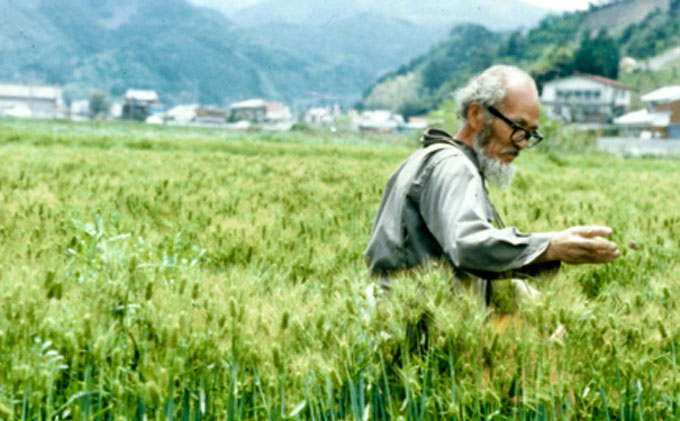
Masanobu Fukuoka, the father of natural farming, was the first to put this theory into practice.
About Masanobu Fukuoka

Masanobu Fukuoka was a Japanese agricultural chemist who left his professional career to become a natural farmer and philosopher.
After serving in WWII, Fukuoka inherited land and cultivated it with different natural methods which turned his land into a food forest over 30 years. Fukuoka managed to create his very own sustainable farm by simply allowing nature to “do its thing”. His crops were disease-free, high-yielding and without chemical in-puts. Doing so, he shocked agriculturists and was praised by environmental activists around the world.
Books
He wrote several books, but his best-seller The One-Straw Revolution (1978) was praised and spoke directly to the organic farmers and activists at the time.
His last book, Sowing Seeds in the Desert(1996) proposed natural farming as a method to combat the climate crisis and the corporatization of agriculture. Not only that, but reduce global poverty, starvation, and desertification.
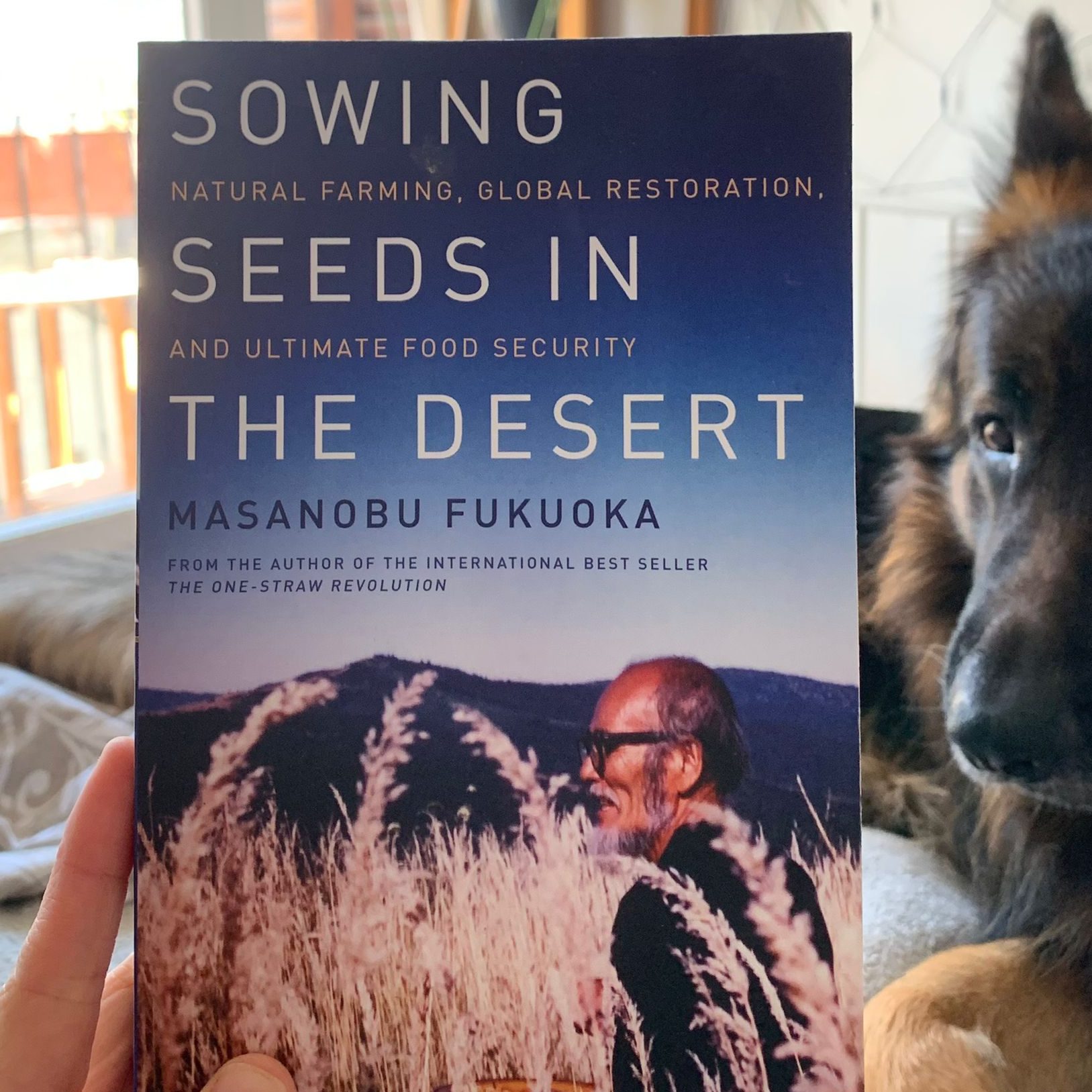
About Sowing Seeds in the Desert
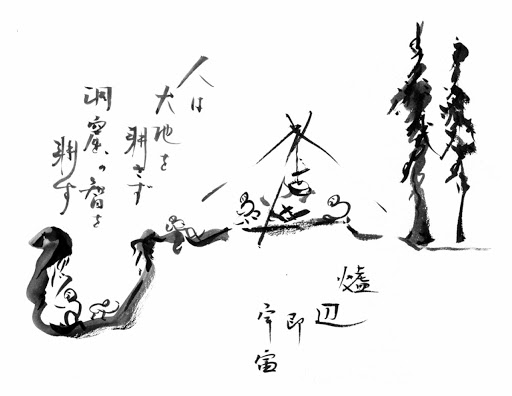
Sowing Seeds in the Desert is not only interesting from an agricultural and environmental perspective, but also spiritually. Throughout the book, Fukuoka talks about his natural farming to the reader with the philosophy behind his practice. He shows his thoughts through sumi-e, a Japanese brush-and-ink technique.
Nature & Humans
In the book, Fukuoka explains how science has effected nature and the human mind. Revolutionary scientists such as Galileo, Darwin and Einstein influenced our society’s way of separating humans from nature to analyse it.
Although it has been useful for taking nature apart to learn from it, it’s been no use to understand nature’s reality. It only damages it with scientific modifications, even though scientists usually have its best interest at heart.
Natural Culture
Therefore, Fukuoka thought man should reunite with nature by creating a culture appreciating its truth and beauty.
Some would consider this way of life boring and primal. However, if we continue on the path of destroying nature to such an extent that it’ll no longer be able to restore itself, the natural way of life will be futile.
What is the path then, you ask?

The healing of the land and the purification of the human spirit is the same process.
Masanobu fukuoka
Fukuoka ends his philosophical take on agriculture and the environment with one simple sentence: we must find our way back to true nature. If people were to experience nature as something sacred and abundant, beyond human invention people will create a free and generous community.
“We must set ourselves to the task of revitalising the earth. Regreening the earth, sowing seeds in the desert – that is the path society must follow.”
 Spiritually